A business owner spends money on ads, posts content often, and even hires talent.
Yet sales remain slow, leads slip away, and competition moves ahead.
They feel confused and blame the market. But the real gap is something else.
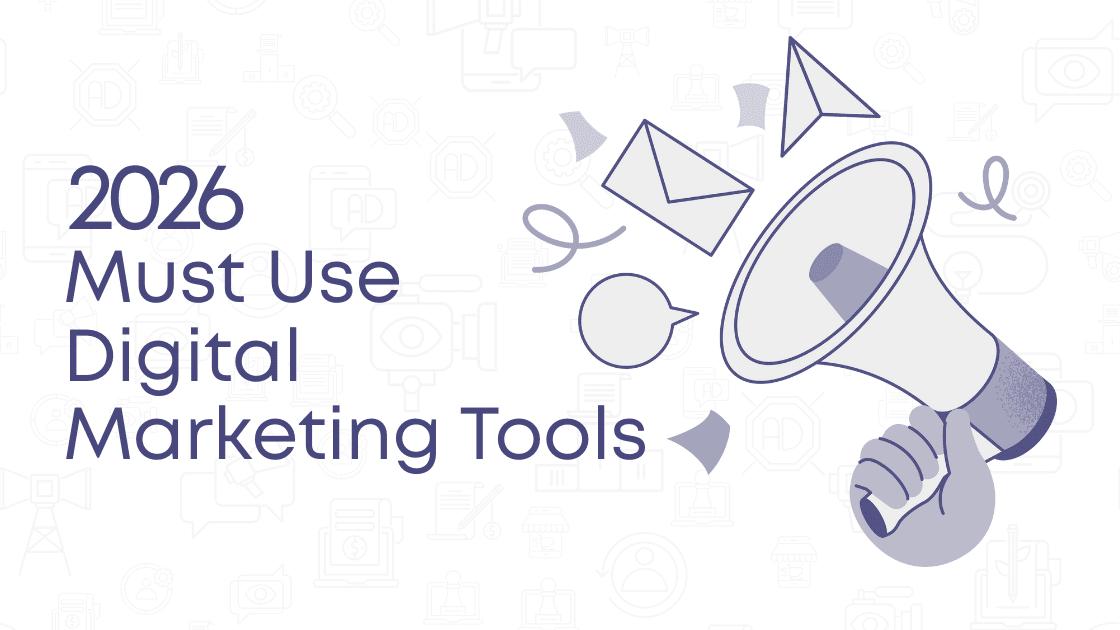
Most businesses today execute marketing without systems and tools, which leads to wasted time and poor returns. 2026 belongs to businesses that use Digital marketing tools, automation, intelligence, and data to make better decisions.
This guide shows you the most important tools your business needs, how digital marketing works today, and how smart brands grow online using technology.
Let us begin.
What Digital Marketing Really Means Today
Digital marketing is simple at its core.
It is the process of reaching customers online, engaging them across platforms, and guiding them to buy. It includes:
- Websites
- Social platforms
- Search engines
- Ad networks
- Content
- Analytics tools
But here is what many miss:
Digital marketing is no longer a set of separate activities.
It is an ecosystem where tools drive decisions, customer experience, and revenue.
How Online Channels Work Together
Online channels form a chain.
SEO brings people in.
Social platforms build interest.
Ads increase reach faster.
Email nurtures leads.
Analytics tracks performance.
If these parts do not talk to each other, growth slows.
Tools help integration.
They make channels work together rather than operate in isolation.
This is the difference between chaotic marketing and controlled growth.
Digital Marketing Tools Every Business Must Use in 2026
We will explore major categories, why they matter, and which tools lead the game.
Tools for Search Visibility
Search is still the first place people look when they want something.
Ranking well gives stable and long-term traffic.
Google Search Console is a must-have.
It shows indexing issues, performance insights, and search impressions.
Recent updates include AI-generated suggestions on content clarity and page experience.
Reference: https://developers.google.com/search/docs
SEO intelligence tools like Semrush or Ahrefs help track keywords, competitors, and backlinks.
Businesses that monitor these insights attract more organic leads over time.
This supports stronger Search Engine Optimization efforts and long-term visibility.
Tools for Social Listening and Scheduling
Social platforms are crowded.
Posting without insight is like speaking in an empty room.
Scheduling tools like Buffer and Hootsuite allow brands to plan content, track engagement, and stay consistent.
Listening tools like Sprout Social or Brandwatch show audience interests and trending conversations.
This helps build relatable content and smarter Social Media Marketing strategies.
AI-Assisted Content and Creation Tools
AI has become a major force in marketing.
Google now uses AI Overviews in search results, and Google Ads uses AI to build audiences and write copy.
These shifts mean marketers need tools that assist planning and creation.
AI-powered platforms worth using:
- Canva for fast creative output
- ChatGPT or Jasper for idea development
- Descript or CapCut for simple video editing
These tools boost output, but human tone still drives trust.
Analytics and Tracking Tools
Marketing without measurement is blind effort.
Google Analytics GA4 is now the default reporting platform.
It tracks user behavior, conversions, and audience flows.
Its event-based model shows deeper insights on actions, not just visits.
Behavior tools like Hotjar and Microsoft Clarity reveal what people do on your site, with heatmaps and real session recordings.
These insights help improve funnels and conversion.
CRM and Automation Tools
If leads drop, your revenue leaks.
CRM tools like HubSpot, Zoho CRM, and Mailchimp automate follow-ups, score leads, and track pipelines.
Businesses using CRM correctly have better revenue retention because they do not lose leads to slow follow-ups.
Ad Management Tools
Paid ads are now smarter due to automation.
Tools like:
- Google Ads Manager
- Meta Business Manager
helps create campaigns, track audiences, and optimize results over time.
Google’s 2025 improvement in Performance Max uses AI signals to predict which users convert best.
Reference: https://support.google.com/google-ads
Businesses that learn automation now will outperform those using old manual targeting.
Tools for Content Planning and Workflow
Content drives awareness, trust, and lead nurturing.
Planning tools like Notion, Trello, and Airtable help teams stay consistent and aligned.
Consistency wins trust faster than sporadic high effort.
Tools for Website Experience and Optimization
Your website is your digital office.
Slow websites lose customers.
Tools like PageSpeed Insights, GTMetrix, and VWO help improve loading, experience, and conversion testing.
Better UX means higher sales without extra ad spending.
Tools for Local Growth
Not every business scales nationally.
Local tools matter too.
Google Business Profile, local SEO tools, and feedback platforms help drive foot traffic and reviews.
These often give faster wins than national campaigns for brick-and-mortar brands.
Role of Analytics in Digital Marketing Growth
Analytics tells you what works and what fails.
Without it, decisions are emotional.
Analytics tools show where traffic comes from, what users like, where they exit, and what pushes them to buy.
Smart businesses review analytics weekly and improve step by step.
This approach scales growth without unnecessary spending.
Why Content Matters in Digital Marketing
Good content pulls people in.
It explains value, builds trust, and moves customers through the funnel.
Content powers SEO, social reach, ads, and email nurturing.
Tools help scale output but tone, clarity, and structure still need human touch.
In short, strategy plus tools win over tools alone.
How Digital Marketing Has Changed Recently
Two major shifts across 2024 and 2025 reshaped marketing:
AI-Driven Search and Ads
Google now summarizes search answers before showing links.
This means content must be deeper and more helpful.
Businesses using AI-supported tools spot gaps faster and adapt easier.
Rise of Shorts and UGC
Users prefer quick content, real voices, and authentic stories.
This affects how brands communicate and what they create.
Short-form video tools and monitoring platforms are essential for visibility.
Reference: https://blog.hubspot.com/marketing/video-marketing-stats
These changes push brands to be faster, relatable, and more data-driven.
How a Digital Marketing Funnel Works Today
A funnel looks like this:
People see you online.
They show interest through content.
People consider buying after trust builds.
They convert when intent and value align.
They stay if post-purchase experience is strong.
Tools shape this journey.
They automate steps, measure progress, and reduce leakage.
What Tools Alone Cannot Do
Tools do not replace thinking.
You still need planning, tone, and execution.
This is why many companies hire a Digital Marketing Agency instead of managing everything alone.
Tools support strategy.
They do not create it.
How to Start and Scale Your Tool Ecosystem
Start small.
Choose:
- Website and analytics
- CRM
- Social planning
- SEO intelligence
Add more as processes mature.
Businesses that adopt tools in layers scale smoothly than those that buy everything at once.
Key Takeaways for 2026
- AI support in marketing will accelerate
- Short video and personalization will dominate
- Strategy plus tools wins
- Data beats guesswork
- Content remains the voice of your brand
Early adoption matters.
Conclusion
Digital marketing works when systems support your goals.
Tools help brands scale faster without more people or spending.
Search visibility, automation, content intelligence, and analytics form the new success engine.
If you want help building a digital marketing engine for your business, Techvint can guide you toward better tools, clearer strategy, and faster results.