

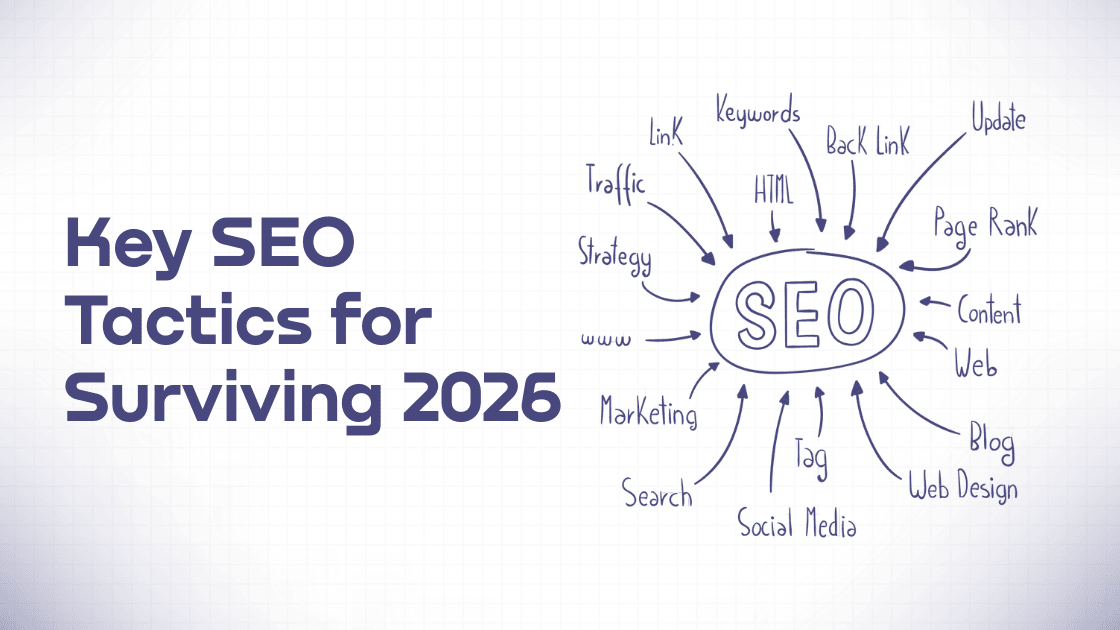
Search keeps changing faster than most businesses can keep up with. One month your website ranks on the first page, and the next month your traffic drops without warning. Many business owners feel stuck because they don’t know what changed. If this sounds familiar, you are not alone. The SEO world is going through a major shift. AI-powered search, stricter spam policies, and new ranking systems are reshaping how Google evaluates content. The truth is simple. SEO in 2026 will reward brands that adapt early. It will punish everyone who continues to rely on outdated tricks. This guide breaks down the key SEO tactics you must master to survive and grow in 2026, written in simple language, backed by real examples, and designed to help you take action.
Why SEO Today Looks Nothing Like SEO in 2020
A few years ago, SEO was predictable. You researched keywords, wrote long blogs, built backlinks, and waited for rankings. But the landscape changed with AI, new search behavior, and new ranking systems. Google now relies heavily on machine learning to understand intent, context, and content depth. Users also expect faster results, clearer answers, and more trustworthy sources.
Two major updates changed everything:
- Google AI Overviews (2024–2025)
AI now summarizes answers directly on search pages. If your content is weak, Google simply ignores it. - SpamBrain and Helpful Content System Updates
Sites with thin, copied, or AI-only content dropped in traffic overnight.
This means SEO is no longer about ranking for keywords. It is about being the best and most reliable source in your niche. A modern Digital Marketing Agency also follows this shift, using smarter strategies, not shortcuts.
Search Intent Optimization: The Core of Modern SEO
Search intent is the single most important factor in rankings today. You can write a long article, but if it does not match what the user wants, Google will not rank it.
For example, if someone searches “best running shoes,” they want a list. They don’t want history or long explanations. In 2026, search intent matters even more because Google uses AI to understand what users expect next.
To master search intent:
- Study the top results, not just keywords
- Understand whether users want to learn, compare, or buy
- Keep answers clear and structured
- Add expert insights that AI cannot replicate
Businesses that adapt to this shift have seen strong growth. A mid-sized B2B SaaS company changed its content from generic posts to intent-based guides and saw a rise in organic conversions within four months.
Authority-Driven Content: Your New Ranking Superpower
Google wants real experts. It wants content written with experience, proof, and clarity. It rewards sites that show expertise instead of guessing. This is where brands fall behind. Most write content only for keywords. But users want knowledge that solves real problems.
Here’s how to build authority with content:
- Share real examples from your work
- Use simple language with high value
- Answer questions directly
- Add supporting data
- Provide clear steps or checklists
When content is written with authority, users stay longer, and Google ranks it higher. A retail brand applied this rule by publishing content based on real customer behavior. Their organic traffic grew in six months.
How AI Search Changes Your SEO Strategy
AI has become a part of search, content, and even ranking predictions. Google is using AI to evaluate quality, trust, and structure. SEO in 2026 is not about gaming the system. It is about understanding how AI reads your content.
AI checks:
- Clarity of answers
- Logical flow
- Expert relevance
- Trust signals
- Verified references
This doesn’t mean you need to write robotic text. It means you need to write clear and helpful content. Google wants human-first content, not keyword-first content.
Semantic SEO and Contextual Depth: Your Survival Tool
Semantic SEO means your content covers topics naturally instead of forcing keywords. It focuses on concepts, entities, and relationships. This is critical in 2026 because Google relies on entity recognition and context understanding.
To apply semantic SEO:
- Write around topics, not keywords
- Use related terms naturally
- Build content clusters with internal linking
- Cover subtopics users care about
- Add FAQs using natural language
Semantic SEO also improves your visibility in AI Overviews, People Also Ask, Featured Snippets, and voice search.
Technical SEO Still Matters More Than You Think
Even with AI and new ranking systems, technical SEO remains the foundation. A slow, weak, or broken site cannot rank. In 2026, Google’s Core Web Vitals and page experience systems will be stricter. A site that loads fast and works well on mobile always wins.
Here are the key areas to fix:
- Page speed
- Mobile experience
- Crawlability
- Indexing
- Internal linking
- Clean site structure
Even small fixes can bring large gains. One client improved load time by 1.2 seconds and saw a lift in organic visibility.
User Signals: The Hidden Ranking Factor Most Brands Ignore
Google looks at user behavior to understand content value. If users bounce, Google assumes dissatisfaction. If they stay and engage, Google considers it high-quality content.
Key user signals:
- Time on page
- Click depth
- Engagement
- Scroll depth
- Return visits
These signals grow stronger when your content is helpful, visual, and easy to read.
How Social Media and SEO Work Together in 2026
You cannot ignore Social Media Marketing anymore. Social content drives brand searches, which drive authority. When more people search for your brand, Google sees you as a trusted source.
Social boosts SEO by:
- Sending users to long-form content
- Creating brand authority
- Increasing mention signals
- Driving engagement
Brands that combine SEO and social grow faster than those that treat them separately.
AI Content and Human Editing: The Winning Combination
AI-generated content alone will not rank. Google made this clear in multiple updates. But AI-assisted content with strong human editing performs very well.
The winning system is:
- AI helps with structure, research, or drafts
- Humans refine, add insights, and ensure quality
This hybrid approach saves time and still keeps content human-centered.
Reference Links
(Used for validation, not copied)
https://developers.google.com/search
https://www.hubspot.com/blog
https://www2.deloitte.com/global/en/insights.html
Conclusion: SEO in 2026 Is About Depth, Trust, and Adaptation
The SEO world will reward brands that embrace clarity, expertise, and smart systems. It will push down everyone who still uses outdated or shortcut methods. The strategies that matter now focus on intent, semantic depth, content authority, technical health, and user experience. Google’s AI-driven updates are here to stay, and they favor brands that understand how people think and search.
If you want help building a strong SEO system for your business, Techvint can guide you.