Imagine launching a new product or service. You invest money into ads expecting fast results. Weeks pass, and you notice leads coming from different platforms. Some customers arrive through Google searches. Others discover your brand while scrolling Instagram or Facebook. Now comes the biggest question business owners ask. Which platform actually drives faster business growth?
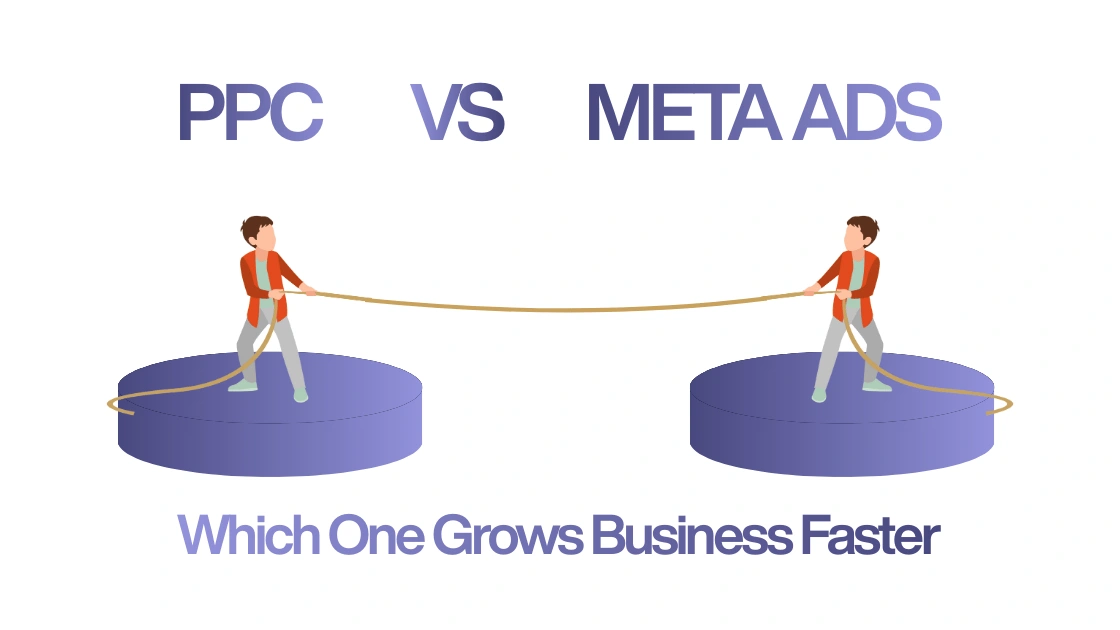
Choosing between PPC and Meta Ads is not about picking one winner. Both platforms serve different customer behaviors and buying stages. Understanding these differences helps businesses spend smarter and grow faster.
In today’s competitive online marketing space, knowing where to invest is critical. This guide explains PPC and Meta Ads in simple language.
What Digital Marketing Means in Today’s Business World
Digital marketing means promoting products and services using online platforms. It includes websites, ads, social media, content, email, and analytics tracking. Businesses use digital channels to attract, educate, and convert customers.
Earlier, marketing focused on visibility. More traffic often meant more sales. Today, digital marketing focuses on intent and customer experience.
This shift is why strategies now combine Search Engine Optimization, paid ads, and Social Media Marketing. Businesses that use multiple channels see better growth stability.
Understanding PPC Advertising and How It Works
PPC stands for Pay-Per-Click advertising. Businesses pay when someone clicks their ad. These ads usually appear on search engines like Google or Bing. The most common example is Google Ads.
PPC targets users actively searching for solutions. These users already have strong buying intent. They want answers, products, or services immediately. That is why PPC often delivers faster lead generation.
Google Ads allows businesses to target users based on keywords. When someone searches for a service, your ad appears instantly. This direct targeting increases conversion chances.
Understanding Meta Ads and Their Role in Brand Growth
Meta Ads include advertising on Facebook, Instagram, and Messenger. These ads focus on audience targeting rather than search intent. Meta platforms show ads based on user interests, behavior, and engagement history.
Meta Ads work strongly for brand awareness and discovery. Many customers do not know they need a product until they see it. Visual storytelling and emotional content drive engagement on these platforms.
Short-form videos, reels, and user-generated content perform strongly on Meta platforms. Businesses build trust by showing real experiences and brand personality. This helps create demand before users start searching online.
Meta Ads support content marketing strategies effectively. They help brands build familiarity and audience relationships.
How Online Channels Work Together for Business Growth
Modern digital marketing rarely depends on a single channel. PPC and Meta Ads often work best when combined strategically. Customers usually interact with multiple platforms before purchasing.
A potential customer may see a brand video on Instagram. Later, they may search that brand on Google. PPC ads capture that search demand. This combination improves conversions and brand trust.
Successful businesses align paid ads, SEO, content, and analytics together. Each channel supports another stage of the customer journey.
Role of Analytics in Comparing PPC and Meta Ads Performance
Analytics plays a major role in choosing the right advertising platform. Businesses must track lead quality, conversion rates, and customer lifetime value. These metrics show real growth impact.
PPC campaigns usually provide direct measurable conversions. Meta Ads provide engagement data and audience insights. Combining both data sources gives deeper marketing clarity.
Modern analytics tools track customer behavior across platforms. This helps businesses understand which channel influences final sales decisions.
Latest Advertising Updates Influencing PPC and Meta Ads (2025–2026)
Digital advertising has changed significantly with AI integration. Google introduced AI Overviews that provide instant search answers. This update prioritizes high-quality and structured content. PPC campaigns now require stronger landing page experiences.
Google Ads also uses advanced AI bidding and targeting automation. These systems analyze user behavior in real time. Businesses must focus more on strategy than manual campaign control.
Meta platforms now prioritize short-form video and user-generated content. Personalized advertising uses behavior tracking instead of simple demographics. Businesses must create authentic and relatable ad creatives.
Reference Sources:
Google AI Ads Update – https://support.google.com/google-ads
HubSpot Marketing Trends Report – https://www.hubspot.com/marketing-statistics
Digital Marketing Institute Insights – https://digitalmarketinginstitute.com/blog
Which Platform Delivers Faster Lead Generation?
PPC often delivers faster results for businesses offering direct solutions. When customers search with strong intent, conversion chances increase immediately. Service-based businesses benefit strongly from PPC campaigns.
Meta Ads usually require longer nurturing periods. Customers often discover brands casually while scrolling. They may engage with content multiple times before converting. However, Meta builds stronger brand recall and customer relationships.
Speed depends on business type, product pricing, and customer awareness levels.
PPC vs Meta Ads Comparison Table
| Factor | PPC Advertising | Meta Ads |
| User Intent | High purchase intent | Discovery and awareness focused |
| Speed of Results | Faster lead generation | Gradual audience building |
| Targeting Method | Text and search-based ads | Interest and behavior targeting |
| Best For | Service businesses and urgent needs | Brand storytelling and engagement |
| Ad Format | Discovery and awareness-focused | Visual and video-based ads |
| Conversion Journey | Shorter decision cycle | Longer nurturing cycle |
| Cost Structure | Pay per click | Pay per impression or engagement |
| Analytics Strength | Direct conversion tracking | Strong audience behavior insights |
| Brand Awareness | Moderate impact | Strong awareness building |
| Long-Term Value | Supports immediate revenue | Builds long-term customer loyalty |
How Digital Marketing Funnels Use Both Platforms Today
Modern marketing funnels combine awareness, consideration, and conversion stages. Meta Ads dominate awareness and engagement. PPC dominates high-intent conversion stages.
Customers often need multiple interactions before purchasing. Meta Ads introduce brands and build familiarity. PPC captures demand when customers start searching for solutions.
Funnels today focus heavily on user experience rather than aggressive selling.
How AI, Privacy Changes, and New Platforms Are Reshaping Advertising
AI now controls audience targeting and ad optimization. Businesses must focus on creative strategy and content quality. Privacy regulations limit user tracking across platforms. First-party data collection is becoming more important.
Short video platforms influence buying decisions strongly. Personalized content increases engagement and reduces advertising waste. Businesses must adapt creative strategies quickly.
These changes reward businesses that focus on trust and transparency.
How Businesses Can Start and Scale Advertising Step by Step
Businesses should begin by defining target audiences clearly. Understanding customer problems helps create relevant ad messaging. Website and landing page quality should be improved before scaling ad budgets.
Businesses should test small budgets across PPC and Meta Ads. Analytics insights should guide budget scaling decisions. Content marketing and SEO should support paid advertising strategies.
Partnering with a reliable Digital Marketing Agency helps businesses avoid costly mistakes. Expert strategy reduces learning time and improves campaign efficiency.
Final Thoughts: Which Platform Actually Grows Business Faster?
PPC delivers faster lead generation when customers already know what they want. Meta Ads build awareness and long-term brand loyalty. Businesses that combine both platforms experience balanced and sustainable growth.
Digital marketing is shifting toward integrated strategies. AI, personalization, and content-driven engagement are shaping advertising success. Businesses that adapt early gain competitive advantages.
If you want help building a digital marketing engine for your business, Techvint can guide you.